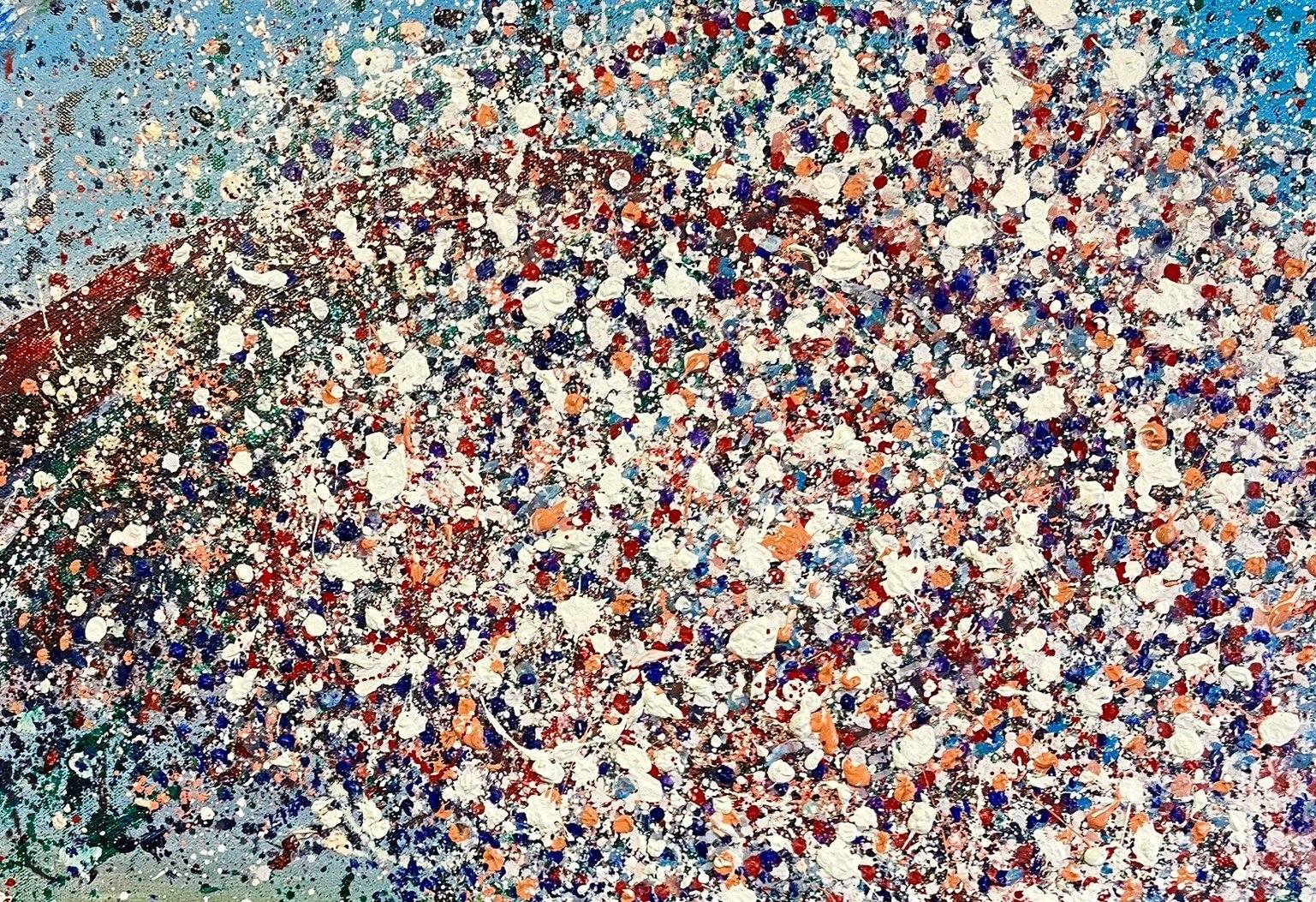
Keeping Up ……. NFT eh?
I will begin with a confession.
When I was at school, there were no calculators.
Computers? Nope, Bill Gates was a lad and Microsoft didn’t exist.
If we had complicated things to do with numbers, we used a slide rule, or “Log Tables”.
Which is to explain that I have seen the world change and I positively welcome change.
There is a label: “FOMO”
Fear Of Missing Out.
So when I began to receive messages on social media along the lines:
“I LOVE your art, you are sooo talented. I really want to buy it as NFT”
First of course there are waves of warm glow – how fabulous, this person in Florida loves my work. Every artist enjoys this sense of validation.
But ten seconds later, having checked among artist e-contacts, I block the messenger in light of dire warnings about scams.
This has been my strategy for a few years now, as with pleas for funds from relatives stuck in foreign lands, but curiosity is getting the better of me.
How is it that these scammers are so prolific?
What do they know that I don’t?
One of the joys of today’s world is that if you have any questions about anything, the answer lies under the keyboard.
And I find that there is a whole ‘metaverse’ out there which is more real today than log tables.
“NFT Fine Art” generates 22 million search results.
The scammers thrive because there IS a marketplace where NFTs are bought and sold as commodities, and royalties are paid to the artist every time one of their works is exchanged.
Wow, lets get in there.
Or maybe not.
That marketplace exists in the virtual world of digital electronics, and the whole system relies on concepts designed for that world which are completely unknown to earthlings like me.
But I had to learn French grammar once, so how hard can it be to understand what a ‘blockchain’ is?
And anyway, Damian Hirst moved along from diamonds and formaldehyde into NFTs …..
So lately I have spent a little time trying to get to know a bit about this metaverse. Evidently there are people around the world who gamble, using weird ‘cryptocurrency’, by buying and selling NFTs, obviously hoping that they sell for more than they cost to buy – a basic instinct known to man ever since communal living was replaced the drive to collect gold.
Of course they don’t use gold now, the fave currency used for these exchanges in the ether is called …… Ethereum.
So – am I going to dive in to this Metaverse?
No.
And why not?
Fear.
Our ancestors were afraid of wandering off into the dark forest. They knew that people who did that didn’t always come back. This ‘metaverse’ is the dark forest for me (and, btw, this has nothing to do with any social media company.)
It was created by people who honed their skills designing video games. They use computer code which is far beyond my French grammar. It is a dark forest where rules, laws and regulations may or may not be observed, and which is inhabited, amongst many who are entirely honest and well-meaning, by some bandits whose aim is to steal. It is likely that the nice message about my lovely paintings didn’t actually come from a respectable person in Florida, but originated on a keyboard in a dark cave somewhere deep in the forest. The follow up to the enquiry about NFTs is for me to click on a link they helpfully sent me to open an account so that I can begin to accumulate piles of Ethereum (gold?), just fill in the bank details here. Really?
I paint. I create art that I want people to enjoy looking at.
I admit I am still confused about one aspect of this NFT marketplace -
What happens to the physical piece I have painted?
Hirst apparently offered to destroy those of his that were bought as NFTs so that the owner of the digital work could be sure that what they owned was unique. I certainly don’t want to destroy paintings myself even if I am going to receive 0.0001 ETH any time the digital copy is exchanged. (And, OK, I know this is maybe irrational as I have no control over what purchasers of my paintings do with them – I think destruction is unlikely.) This is what the Blockchain is – a (digital) ledger permanently linked to the NFT and accessible by the artist originator to keep track of all the exchanges of this valuable commodity forever. I have absolutely no idea about where the paintings I have sold to date are now. Would I want that information just because it is technically possible?
There are ‘Immersive art’ exhibitions where digital works are displayed on multiple screens creating a whole room that is completely covered by moving images of electronic (NFT) artwork.
I saw this on: https://seriousartonly.com/.
Frankly it reminded me of 1960s psychedelia gone large, but it is a whole new (or at least new to me) glorious artform, which only exists digitally.
Art has always come in many different forms and this new form flows from computers. I suspect that there are fewer artists working in that field than there are holding brushes – less competition?
There has been a hugely popular travelling circus showing van Gogh paintings in this immersive way, and the reviews all seem very favourable.
But despite the messages about my amazing talent, I am afraid it is not realistic to think that my paintings stand in comparison with works of Hockney and van Gogh, but I feel good when I think of one of my paintings hanging on a wall giving people pleasure when they look at it.
Good luck to any e-artists who DO launch into the metaverse, and good luck to the NFT buyers and sellers who want to make Ethereums through trading, but I am making a conscious, informed choice not to go there.
Reference for a good intro to NFTs:
https://professionalartist.com/nfts-the-ultimate-guide-for-fine-artists/